Forward Deployed Engineering
A delivery method within operational systems work: how a diagnostic becomes a deployed system with a measurable outcome.
Proximity is the method
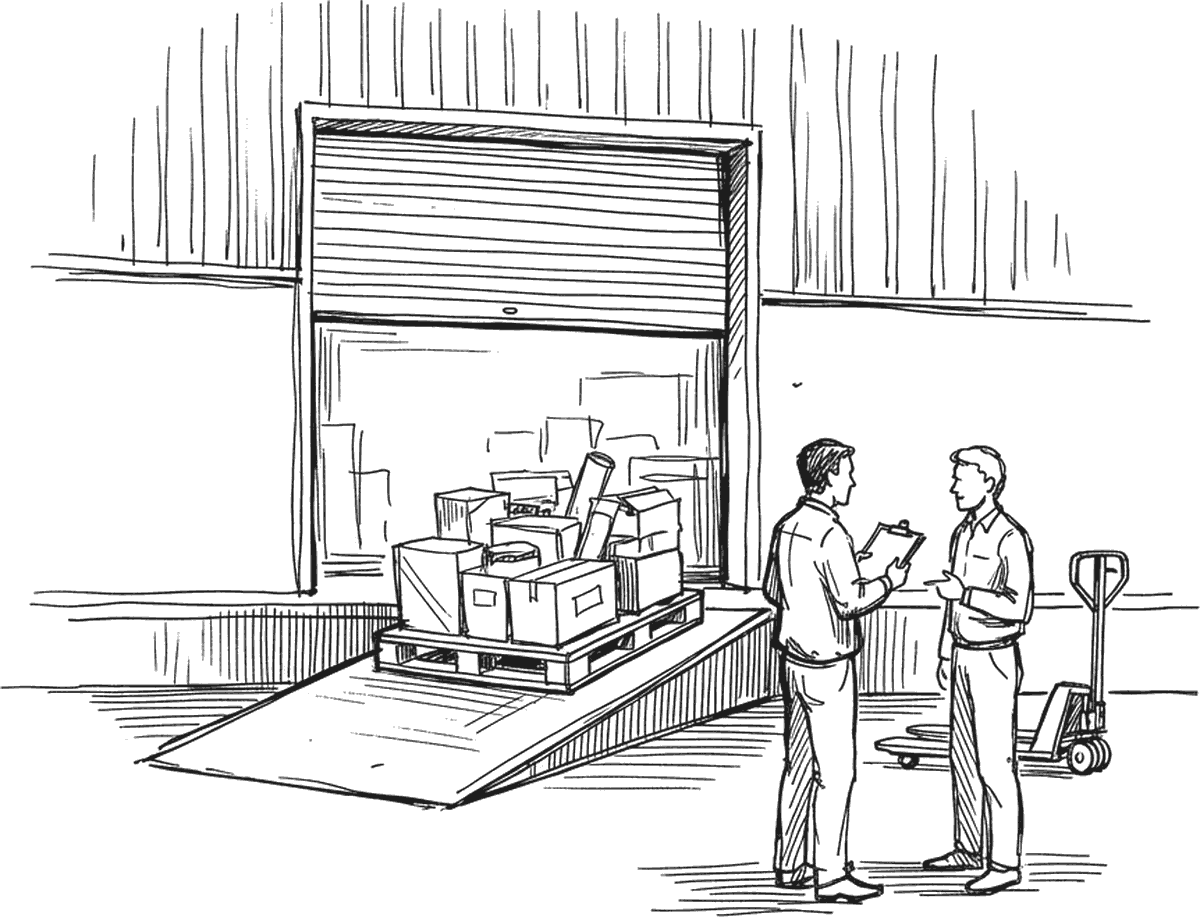
Forward deployed engineering means working where the problem lives. The engineer stays close enough to the operation to see the constraint firsthand, and that closeness shortens the loop between noticing something and changing it.
Proximity is the instrument here, because the information the work depends on doesn't exist anywhere else. Ask people to describe their process and they'll give you the version they'd give a new starter, the intended path with the automatic detours smoothed away, much as someone describing their drive to work names the roads and leaves out the lane they always move into before the bridge. Those detours are the load-bearing part, and the only way to recover them is to be there while the work happens and notice the thing nobody mentioned, because it never occurred to them that it counted.
Distance also changes what you're told. The first week brings the official account. Later, once it's clear that nobody is being scored, people start mentioning which approver is slow, which report nobody reads, and which field everyone fills with a placeholder. None of that reaches a visitor, and all of it is the actual system.
The unit of delivery is an outcome
The result that counts is a measurable change in how the operation performs: shorter turnaround, fewer escalations, higher completion, less manual reconciliation, or some other operational measure. A deployed feature is one step on the way to it.
Artifacts became the currency because they're countable. A platform, a report, a migration finished on schedule: each can be verified by someone who wasn't there, at a fixed moment, without any judgment. Outcomes have none of those properties, which is why delivery structures drift toward the artifact even when everyone in the room wants the outcome.
An outcome that holds needs three constraints. The change has to show up in the operation itself, in how the work moves, with the tooling as the means of getting there. Someone has to name it before the work starts, so nobody can pick it afterwards from whatever happened to move. And it has to outlast the attention, because a number that improves while a project team is in the building and slides back within a quarter was measuring the project, and the system it was meant to describe stayed where it was.
Build, deploy, stay
Deployment changes the problem, because real use turns up conditions no requirements document predicted. The engineer stays through that first contact and keeps adapting until the organization owns the system and can run it.
Some requirements don't exist until deployment, which is a stronger claim than saying they're hard to gather. Volume changes behavior, exceptions arrive at rates nobody predicted, habit outruns policy, and incentives show up in ways no demonstration reproduces, the way the real route across a park only shows once the grass beside the new path starts to wear. A constraint that lives in the relationship between a review step's throughput and the rate of incoming demand isn't a property of either one, and no amount of analysis before deployment will surface it.
So staying is a matter of timing: that's when the useful information arrives, and a delivery model that ends at launch has arranged to leave just before the point of the whole exercise.
Leaving well
The exit condition is ownership, not launch. The work is finished when the organization no longer needs the person who built the system to operate it, understand it, or change it.
Ownership has a testable form. Someone inside the organization can explain why the system works the way it does, which goes a layer deeper than knowing how to use it. Someone has changed it without the original builder in the room, and the change held. When it broke, the organization found the cause itself. Until all of that has happened, the handover is still just a document, and a system only its author can maintain is a liability with a good interface.
A delivery method within operational systems work: how a diagnostic becomes a deployed system with a measurable outcome.
If this describes an operation you’re responsible for, the diagnostic is where that conversation starts.
How engagements begin