Mindset Before Experience
Years in a role measure exposure. They say very little about how a person looks at what they were exposed to.
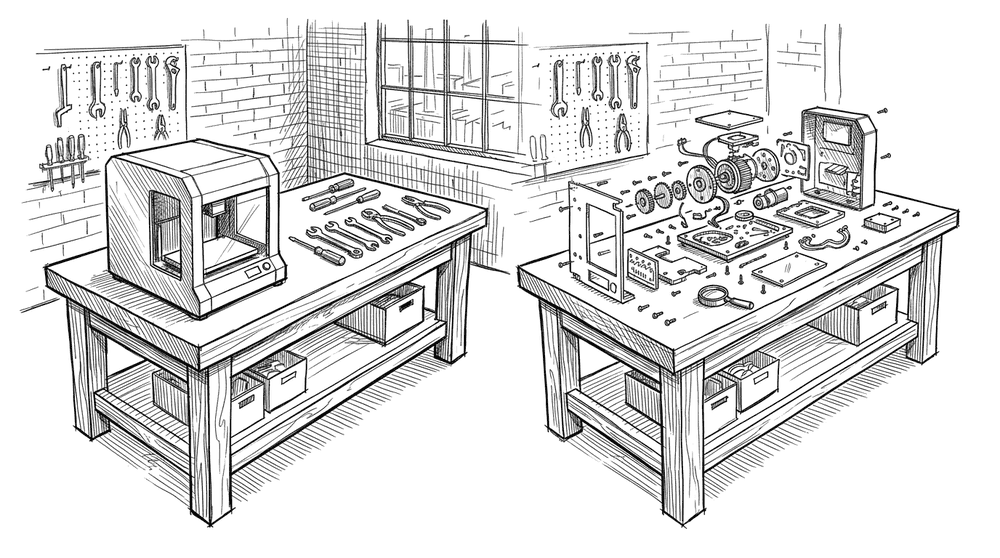
What a count of years measures
A job description asks for ten years, or fifteen, in a particular industry. I understand why. Years are easy to count, and they feel like a stand-in for judgment. But a count of years measures exposure. It says very little about how a person looks at what they were exposed to. Two people can spend a decade in the same function, and one learns the routine while the other learns why the routine exists.
The risk in leaning on the count is that it filters for sameness. A screen built on years in one industry selects for people who have seen one set of arrangements many times, and it quietly removes people who have seen several and learned what they share. The first group knows the answers that worked where they were. The second knows how to find out which answers a new place needs.
What mindset looks like
Mindset shows up in a few specific habits. It begins with asking what produces a result rather than who caused it. It continues with owning the outcome and not only the task, so that the handoffs, the definitions, and the information leaders rely on are treated as part of the job. And it ends with measurement, because an improvement that cannot be shown is only a belief. These habits travel between industries in a way that industry knowledge does not, because every operation, whatever it makes or serves, is a set of people, decisions, information, and incentives arranged in a particular way.
None of this is abstract. Each habit leaves something you can see: a question asked in a first meeting, an owner named for a handoff that had none, a number written down before a change and checked after it.
My own path
My own path is an argument for this, and not against experience. I have more than fifteen years of it, and it crosses regulated financial aid, revenue operations, marketing finance, creative operations, and AI operations. None of those is the same industry. What carried from each one to the next was a way of looking: find the system, find the constraint, change the structure, and measure the result. In every new setting I begin by asking the people closest to the work to show me how it actually moves, because they hold the knowledge that no document does.
The vocabulary changed every time. Financial aid has its own rules and its own acronyms, and marketing finance and creative operations have theirs. What did not change was the sequence of questions, and once I knew what I was trying to find, learning the vocabulary was the easy part.
Domain depth matters, and where a role truly depends on deep specialist expertise, I would say so plainly. For many operations roles, though, the harder skill is diagnosis. Diagnosis is a habit of mind that a resume hides and a conversation reveals.
A simple way to test it
If you would like to test this, there is a simple way. Describe a real operating problem and ask a candidate what they would want to know first. Listen for questions about structure, ownership, information, and measures, and be cautious of answers that jump straight to a tool or a headcount.
Strong answers tend to start with a map: where the work comes from, who touches it, where it waits, and how anyone would know it had improved. Weaker answers start with a solution. The solution may even be right. It is only early.
I would welcome that conversation. Give me a problem and I will show you how I think, starting with what I would ask before I would change anything.
If this describes an operation you’re responsible for, the diagnostic is where that conversation starts.
How engagements begin